
Focus on prospects worth starting a conversation with.
Build a prospecting workflow around relevant accounts, qualified contacts, and a clear next action. Connect the information your sales team needs before the first outreach.
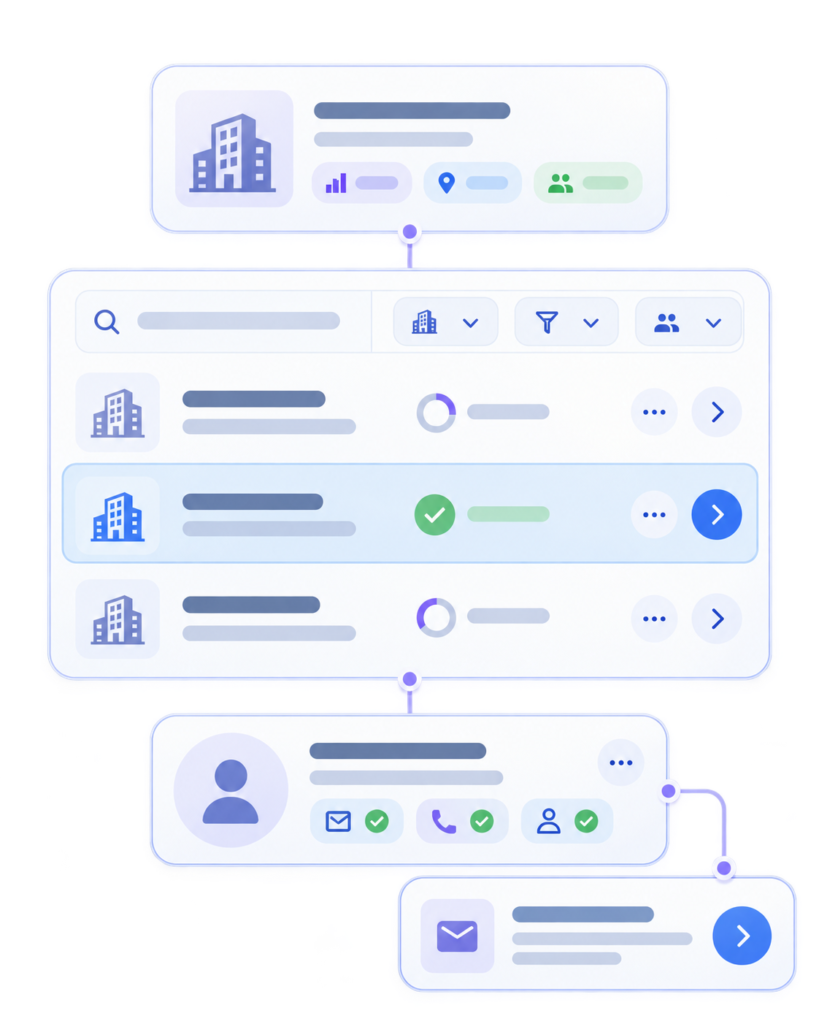
Connected Workflows
Human Ownership
Reviewale Outcomes
Build a prospect list your sales team can act on
Organize target accounts, relevant contacts, and qualification context before outreach begins. A useful prospect record explains why the organization fits, what the team knows, and who should take the next step.
Define account fit
Agree the industry, organization profile, and customer problem you want to address. Shared criteria keep prospecting focused rather than producing a long list with unclear relevance.
Capture research context
Keep the source, role, and useful account notes with the prospect. Distinguish information you have verified from assumptions that still need a conversation.
Prepare the sales handover
Attach the qualification context and suggested next action to the owner’s handover. The receiving salesperson should understand why the account deserves attention.
Make the commercial handover clearer
Qualification that survives the handover
Keep the fit criteria, evidence, and open questions together. The receiving team can decide what needs to be verified in the first conversation.
Feedback from sales
Record why a researched account did or did not progress. Use that feedback to refine future targeting and qualification criteria.
01
02
03
04
Research with a reason
Explain which business need makes the account relevant. The sales owner can begin with a useful hypothesis rather than a name without context.
A focused outreach queue
Separate accounts ready for contact from records that still need research. This helps the team allocate time to a purposeful next action.
Follow the work from request to result
Define the information, owner, and expected outcome at each step.
01
Target accounts
Capture the information relevant to this stage.
02
Research context
Prepare the context the receiving team needs.
03
Qualification review
Review the information against the agreed criteria.
04
Owner handover
Assign the action or decision to its owner.
05
Outreach outcome
Record what happened and continue the relationship.
Use Cases
Put the capability to work in a real business journey
Choose the journey that matches the work your team needs to complete.
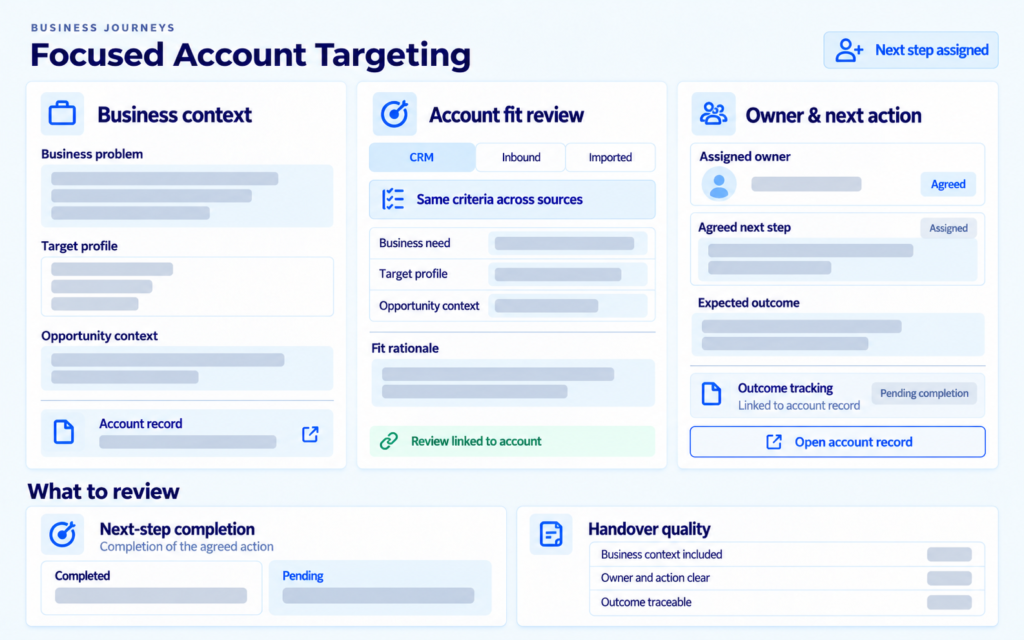
Focused account targeting
Begin with a defined business problem and target profile. Use the same fit criteria when reviewing accounts from different sources.
- Start with the relevant customer or opportunity context
- Agree the owner and expected next action
- Keep the outcome connected with the record
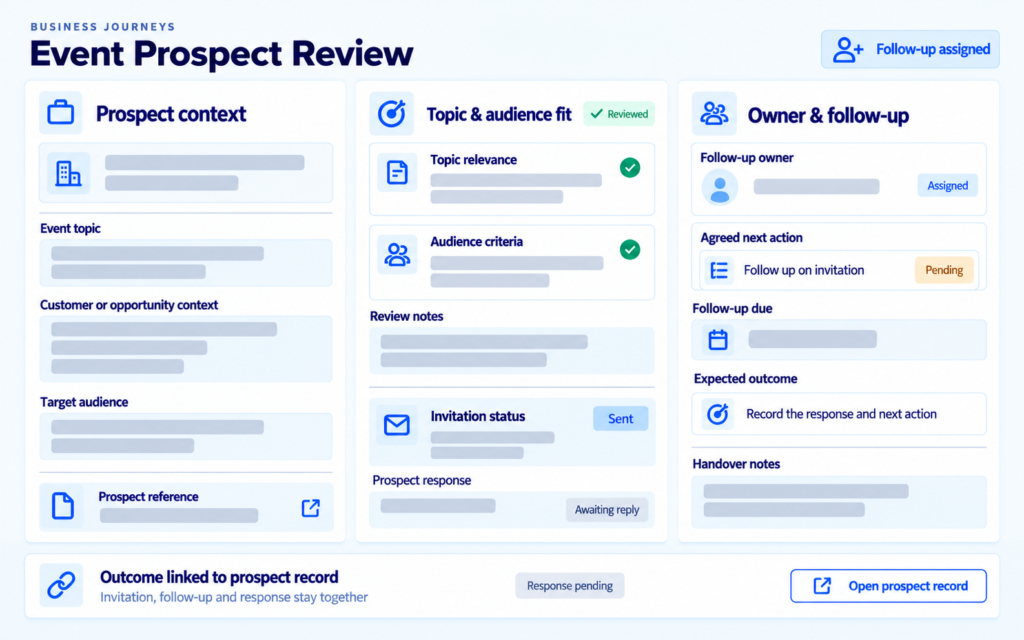
Event prospect review
Review event prospects against the topic and audience criteria. Keep the invitation status and follow-up responsibility clear.
- Start with the relevant customer or opportunity context
- Agree the owner and expected next action
- Keep the outcome connected with the record
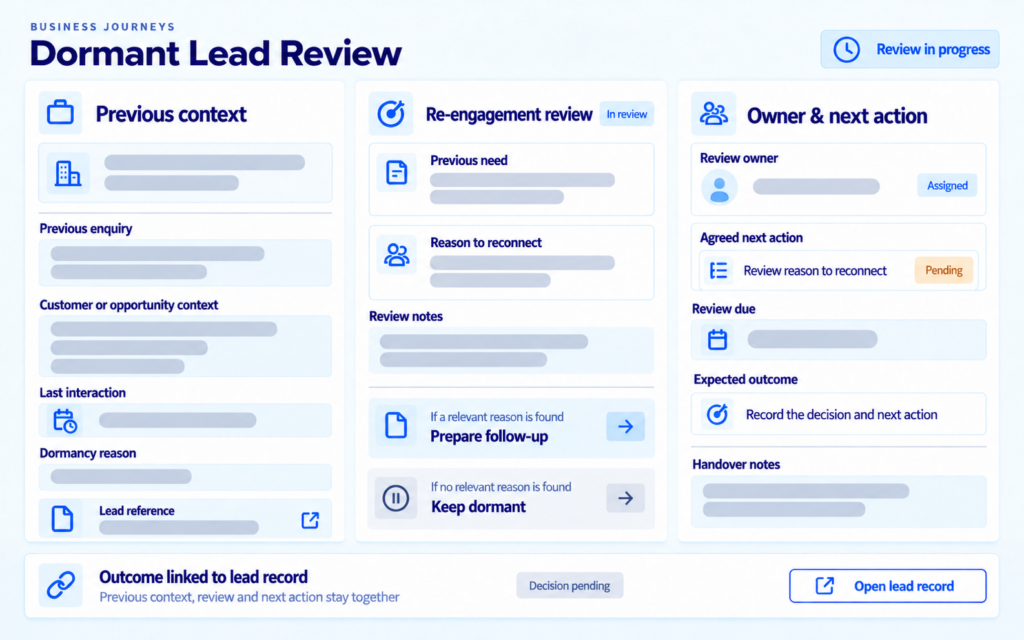
Dormant lead review
Revisit older enquiries with their previous context. Determine whether there is a relevant reason to restart the conversation.
- Start with the relevant customer or opportunity context
- Agree the owner and expected next action
- Keep the outcome connected with the record
Questions before you get started
Lead generation creates interest or enquiries. Prospecting identifies and researches accounts that may fit your offering, then prepares a relevant next conversation.
When the team has enough customer context to qualify a concrete potential deal. Define that transition consistently so research records do not inflate the sales pipeline.
Use the sources your organization is authorized to access, including existing enquiries, events, account research, or scoped data integrations. Maintain the source and distinguish verified details from assumptions.
Research and qualification context should remain with the relationship record. The salesperson can continue the conversation without losing the reason the account was selected.