
Keep every opportunity moving toward a clear next step
Bring deal stages, sales ownership, activity, and opportunity value into one connected workflow. Help teams see what is progressing, what is waiting, and where attention is needed

Make opportunity progress visible and actionable
Connect the deal stage with customer context, recent activity, and the next action. A useful pipeline review explains what changed, what is holding progress back, and what the owner needs to do next
Define meaningful stages
Give each stage an agreed entry and exit condition. A moved card should represent a real change in the opportunity, not simply an update for the report.
Connect activities with the deal
Keep meeting outcomes, customer requirements, and follow-up commitments with the opportunity. Review activity in relation to its purpose and result.
Review blockers and ownership
Identify opportunities waiting on a customer response, proposal, or internal decision. Assign a specific next action rather than leaving the deal marked as pending.
Make the commercial handover clearer
Less ambiguity in the next action
Turn a vague follow-up into a specific task, owner, and intended result. The opportunity review becomes a decision about what will move the deal forward.
Clearer management discussions
Keep activity, stage, value, and blockers together. Managers can discuss the business behind the pipeline rather than asking the owner to rebuild the story.
01
02
03
04
Stages that reflect customer progress
Use the same definition of progress across the team. A proposal sent and a proposal discussed should not be treated as the same customer milestone.
Earlier attention to stalled deals
Review elapsed time alongside the latest customer evidence. A quiet opportunity needs an explanation before it becomes a surprise in the review.
Follow the work from request to result
Define the information, owner, and expected outcome at each step
01
Opportunity context
Capture the information relevant to this stage
02
Stage criteria
Prepare the context the receiving team needs
03
Customer activity
Review the information against the agreed criteria
04
Blocker review
Assign the action or decision to its owner
05
Outcome recorded
Record what happened and continue the relationship
Use Cases
Put the capability to work in a real business journey
Choose the journey that matches the work your team needs to complete
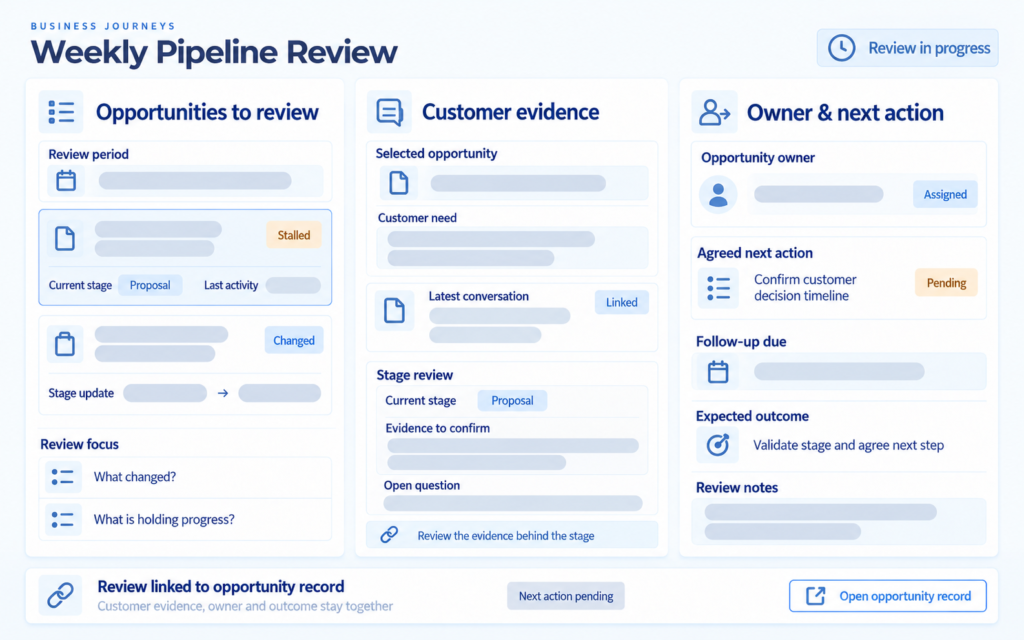
Weekly pipeline review
Review opportunities that changed or stalled. Discuss the customer evidence behind the stage and agree the next action with its owner.
- Start with the relevant customer or opportunity context
- Agree the owner and expected next action
- Keep the outcome connected with the record
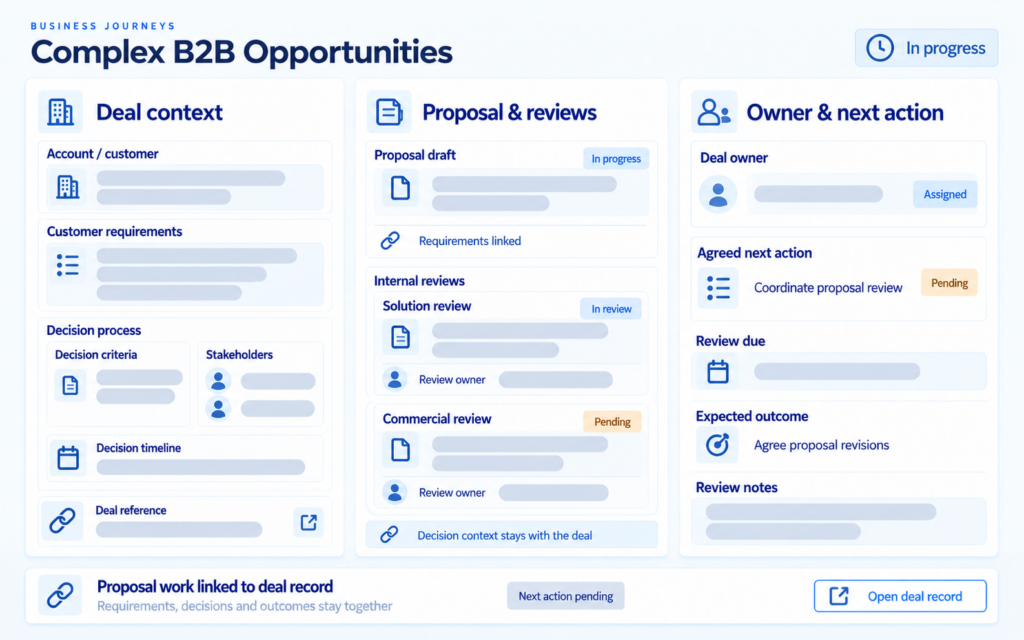
Complex B2B opportunities
Keep the requirements and decision process connected with the deal. Use the context to coordinate proposal work and internal reviews.
- Start with the relevant customer or opportunity context
- Agree the owner and expected next action
- Keep the outcome connected with the record
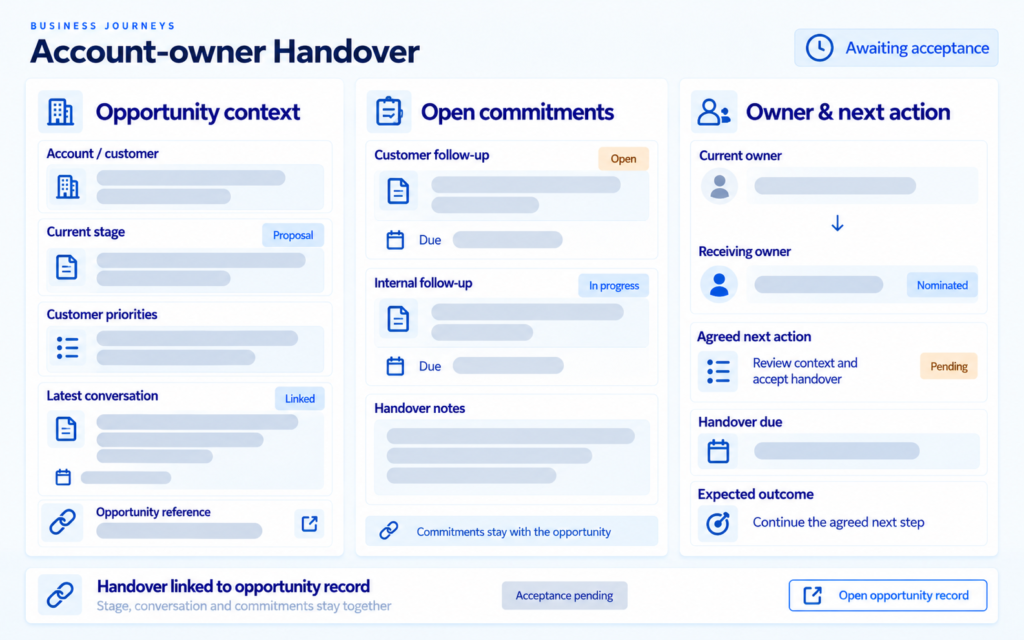
Account-owner handover
Prepare the current stage, latest conversation, and open commitments before ownership changes. The next owner can continue the opportunity with context.
- Start with the relevant customer or opportunity context
- Agree the owner and expected next action
- Keep the outcome connected with the record
Questions before you get started
A qualified potential deal with an owner, defined stage, and a useful next step. General contacts or unreviewed research lists should not be treated as active opportunities.
Use customer milestones and the evidence needed to enter or leave each stage. Keep the definitions consistent across the team.
No. Pipeline value describes opportunities. A forecast depends on agreed assumptions about which outcomes are expected and when.
Ask what changed, which customer evidence supports the stage, what blocks progress, and who owns the next action.