
3Dolphins
PingLead · Revenue Management
Connect sales activity with a clearer view of revenue opportunities.
Bring opportunity progress, commercial context, and sales outcomes into a consistent review. Help teams understand where value is progressing and what needs attention.

Connect commercial review with the activity behind the numbers
Review opportunity value, stage progress, and account context using shared definitions. The goal is to help management understand where commercial work is moving, where it is blocked, and what action is needed.
Agree commercial definitions
Distinguish opportunity value, expected outcomes, and revenue recognized by Finance. Shared definitions prevent different teams from interpreting the same total differently.
Connect progress with customer evidence
Review the stage and activity behind an opportunity value. A pipeline amount becomes more useful when the team understands its current customer context.
Turn review into accountable action
Use commercial discussions to assign the next step for stalled, renewal, or expansion opportunities. Revisit the result at the next review.
Make the commercial handover clearer
Consistent planning assumptions
Use shared definitions and make uncertain assumptions explicit. Teams can discuss expected outcomes without confusing them with completed revenue.
A clear boundary with Finance
Keep sales opportunity management separate from financial recognition and accounting. Finance remains responsible for its own revenue definitions and decisions.
01
02
03
04
Commercial numbers with context
Read opportunity value alongside stage, customer evidence, and the current blocker. Management can see what work supports the number.
Actionable performance reviews
Identify the decision or follow-up needed for the opportunities under review. Commercial visibility should lead to accountable action.
Follow the work from request to result
Define the information, owner, and expected outcome at each step
01
Definitions agreed
Capture the information relevant to this stage.
02
Context assembled
Prepare the context the receiving team needs.
03
Progress reviewed
Review the information against the agreed criteria.
04
Actions assigned
Assign the action or decision to its owner.
05
Outcomes revisited
Record what happened and continue the relationship.
Use Cases
Put the capability to work in a real business journey
Choose the journey that matches the work your team needs to complete
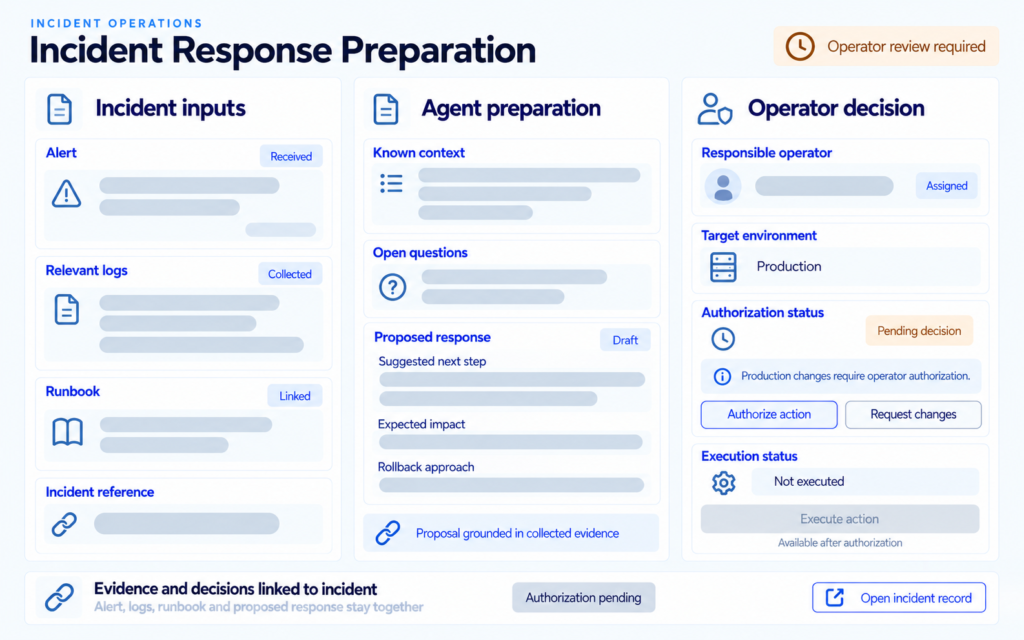
Prepare the incident response before the team joins
Collect the available incident context, summarize what is known, and prepare a proposed response. A responsible operator reviews any action that changes a production environment.
- Input: alert, relevant logs, and the runbook
- Agent work: organize evidence and propose the next step
- Human decision: authorize a consequential system action
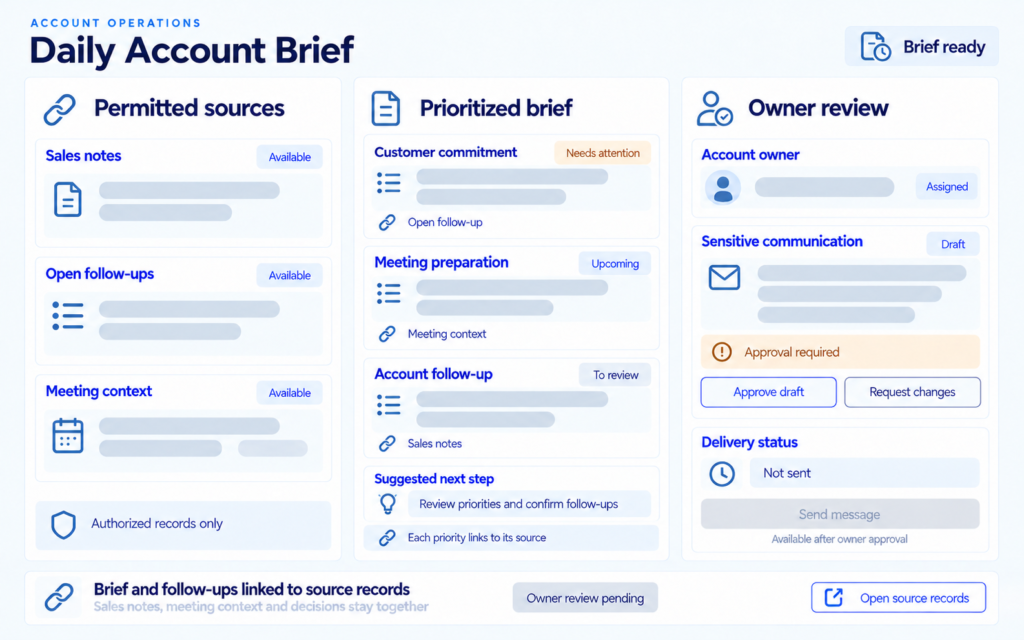
Turn scattered activity into a useful daily brief
Assemble authorized sales notes, open follow-ups, and meeting context. Prepare a prioritized brief so the account owner can decide what needs attention.
- Input: permitted customer and activity records
- Agent work: summarize priorities and prepare follow-ups
- Human decision: approve sensitive customer communications
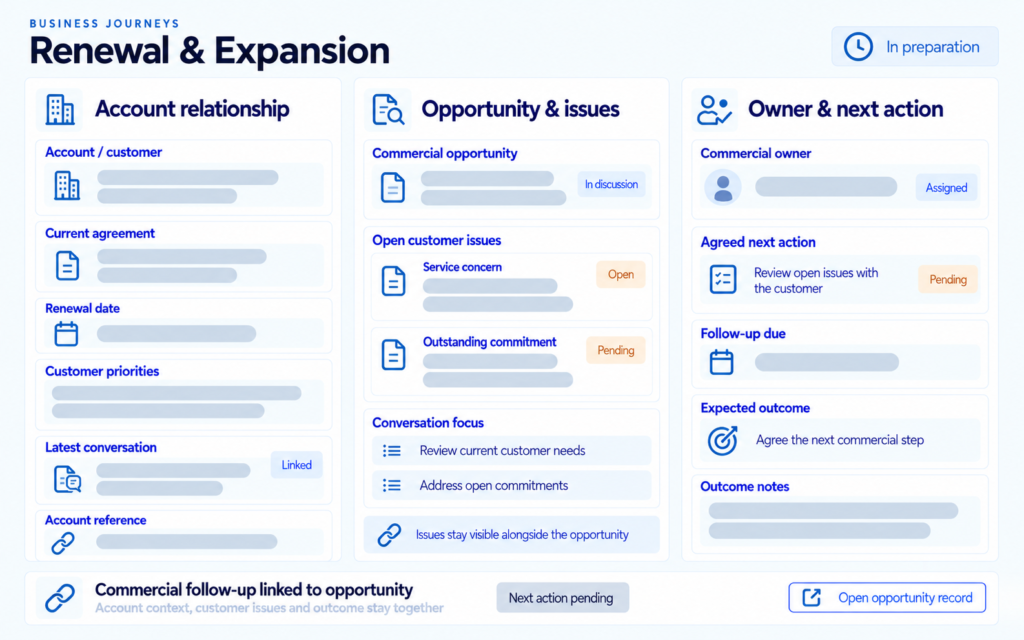
Prepare a vendor review with evidence attached
Gather the documents available for a supplier assessment and organize them against the review criteria. Highlight missing or conflicting information before the procurement team decides.
- Input: supplier documents and the review checklist
- Agent work: assemble findings and flag gaps
- Human decision: determine vendor suitability
Questions before you get started
No. A potential deal represents commercial work in progress. Finance determines revenue recognition using the organization’s accounting policies.
Pipeline management follows opportunity progress. Commercial review uses that progress and its context to decide where attention and action are needed.
Agree the inputs, time period, assumptions, and review responsibility. Specific forecasting functionality should be confirmed for the deployment.
Finance owns accounting and revenue-recognition decisions. Sales and management should use definitions that keep opportunity reporting distinct from those financial outcomes.