
3Dolphins
PingLead · Quotation & Approval
Move the proposal forward with the right decisions in place.
Connect the customer requirement, commercial proposal, and internal review. Keep quote details, pending decisions, and customer-facing next steps aligned as the opportunity progresses.
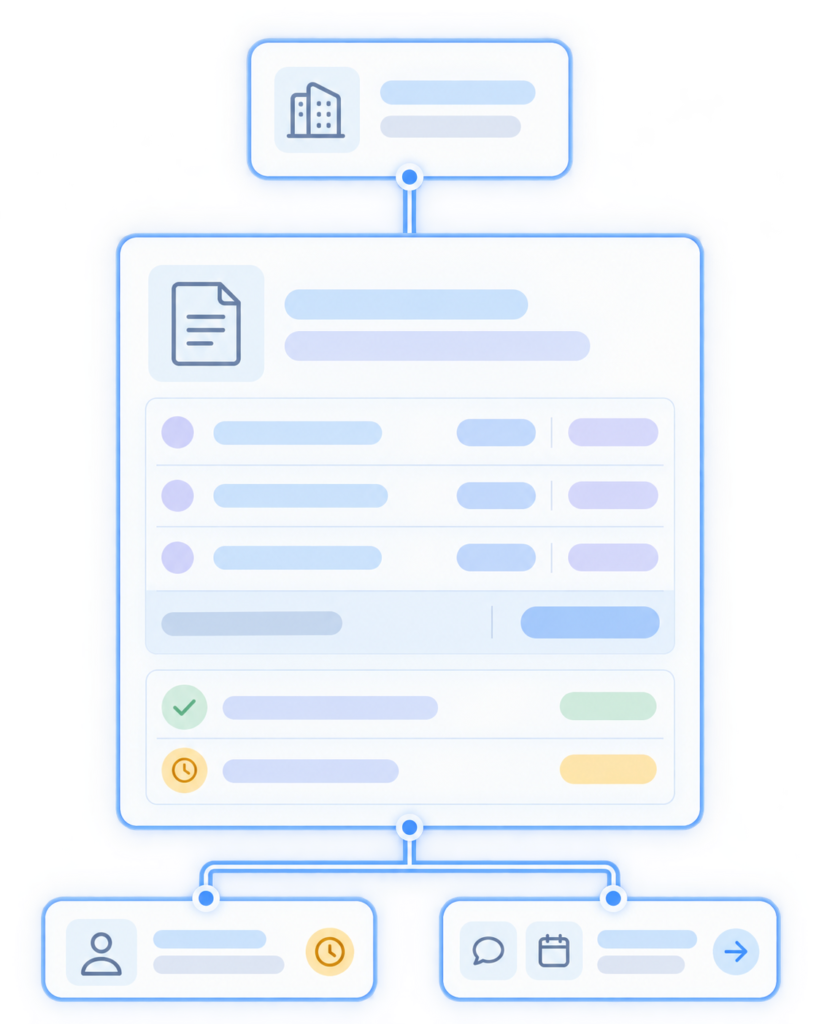
Move the proposal through review without losing its context
Connect the customer requirement, proposed commercial terms, internal decision, and follow-up with the opportunity. Clear review responsibility helps teams resolve a proposal question before it delays the customer conversation.
Prepare a complete proposal brief
Collect the scope, customer requirement, and commercial information needed by the proposal owner. Reduce repeated clarification before the review begins.
Route the required decision
Agree which terms need review and who can authorize them. Make the reason for approval clear so the reviewer can focus on the decision.
Keep revisions connected
Record what changed and why the proposal was revised. The sales owner should know which version and terms are ready for the next conversation.
Make the commercial handover clearer
Fewer uncertain versions
Keep the current reviewed proposal identifiable when requirements change. The customer-facing owner should know which terms are ready to discuss.
Momentum after approval
A decision needs a follow-up action. Connect the outcome with the salesperson who should continue the customer conversation.
01
02
03
04
A clearer review brief
Show the proposed terms, customer requirement, and reason for review together. Approvers can focus on the decision instead of asking for the background.
Review responsibility without guesswork
Agree which owner handles a commercial exception. A request should reach the person authorized to make that particular decision.
Follow the work from request to result
Define the information, owner, and expected outcome at each step
01
Requirement confirmed
Capture the information relevant to this stage.
02
Proposal prepared
Prepare the context the receiving team needs.
03
Review requested
Review the information against the agreed criteria.
04
Decision resolved
Assign the action or decision to its owner.
05
Customer follow-up
Record what happened and continue the relationship.
Use Cases
Put the capability to work in a real business journey
Choose the journey that matches the work your team needs to complete
Discount review
Prepare the requested terms and business rationale for the authorized reviewer. Keep the outcome connected with the opportunity.
- Start with the relevant customer or opportunity context
- Agree the owner and expected next action
- Keep the outcome connected with the record
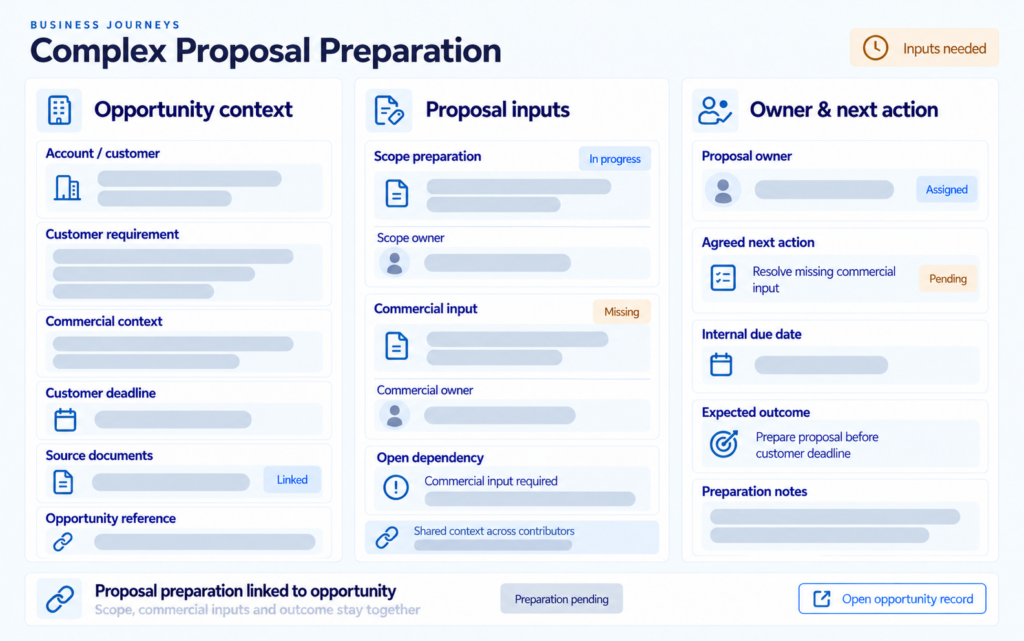
Complex proposal preparation
Coordinate scope and commercial context across the people preparing the proposal. Resolve missing inputs before the customer deadline.
- Start with the relevant customer or opportunity context
- Agree the owner and expected next action
- Keep the outcome connected with the record
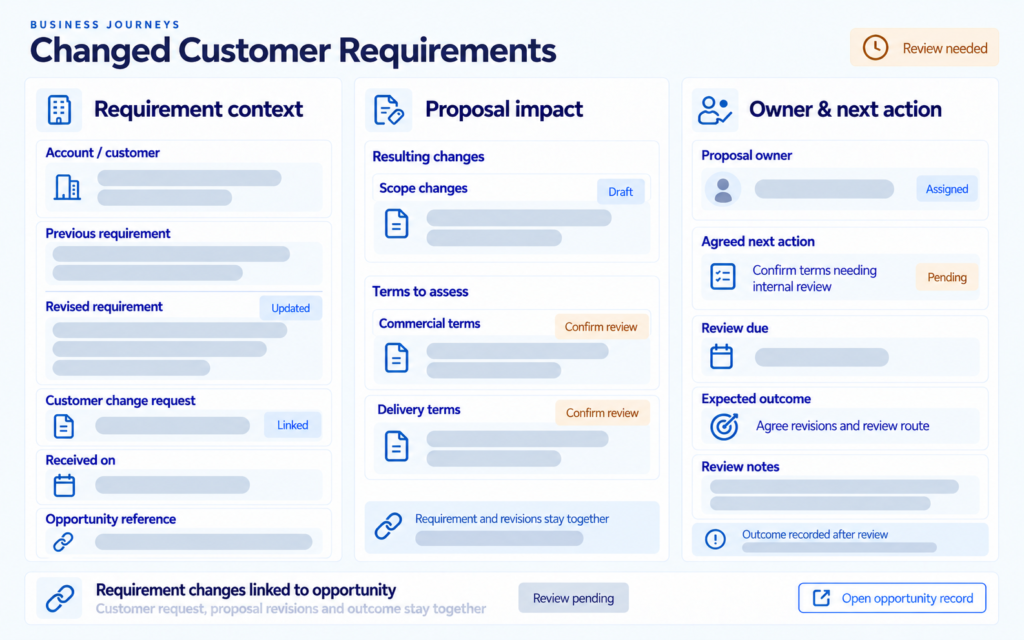
Changed customer requirements
Keep the revised requirement and the resulting proposal changes together. Confirm which terms need another internal review.
- Start with the relevant customer or opportunity context
- Agree the owner and expected next action
- Keep the outcome connected with the record
Questions before you get started
The proposal and the decision affect the same opportunity. Keeping them connected helps sales understand which terms are ready for the customer conversation.
Follow your organization’s policy for pricing, discounts, scope, or other commercial exceptions. The authorized reviewer should receive the reason and supporting context.
Record the changed requirement and identify the current version. Determine whether the revised terms require another review before they are discussed with the customer.
Sales can continue gathering customer context and preparing the next conversation. Terms awaiting authorization should not be presented as approved.